
You've been consistent. You're tracking calories. The scale was moving down steadily for weeks, and then suddenly... nothing. It hasn't budged in 10 days. Panic sets in. Have you broken your metabolism?
Stop. Take a deep breath. You are likely experiencing a "phantom plateau" caused by water retention, or a natural metabolic adaptation that can be managed.
Identifying a True Plateau
First, we must define what a plateau actually is. A lack of weight change for 3-4 days is not a plateau. Weight fluctuation is normal.
The 2-Week Rule
A true plateau is defined as zero change in average body weight for 14 consecutive days while maintaining consistent calorie intake and activity levels.
The Water Retention Mask
The most common culprit is cortisol-induced water retention. Caloric restriction is a stressor on the body. Exercise is a stress. Lack of sleep is a stress.
When stress is high, cortisol rises. Cortisol binds to aldosterone receptors, causing your body to hold onto water. You might be losing fat exactly as predicted (e.g., 1 lb/week), but if you are retaining 1 lb of water that week, the scale will show "0 change."
The "Whoosh" Effect
This leads to the famous "whoosh" effect. Eventually, when stress decreases (you have a relaxing meal, take a rest day, or sleep well), cortisol drops, the water is released, and you might drop 3-4 lbs overnight.
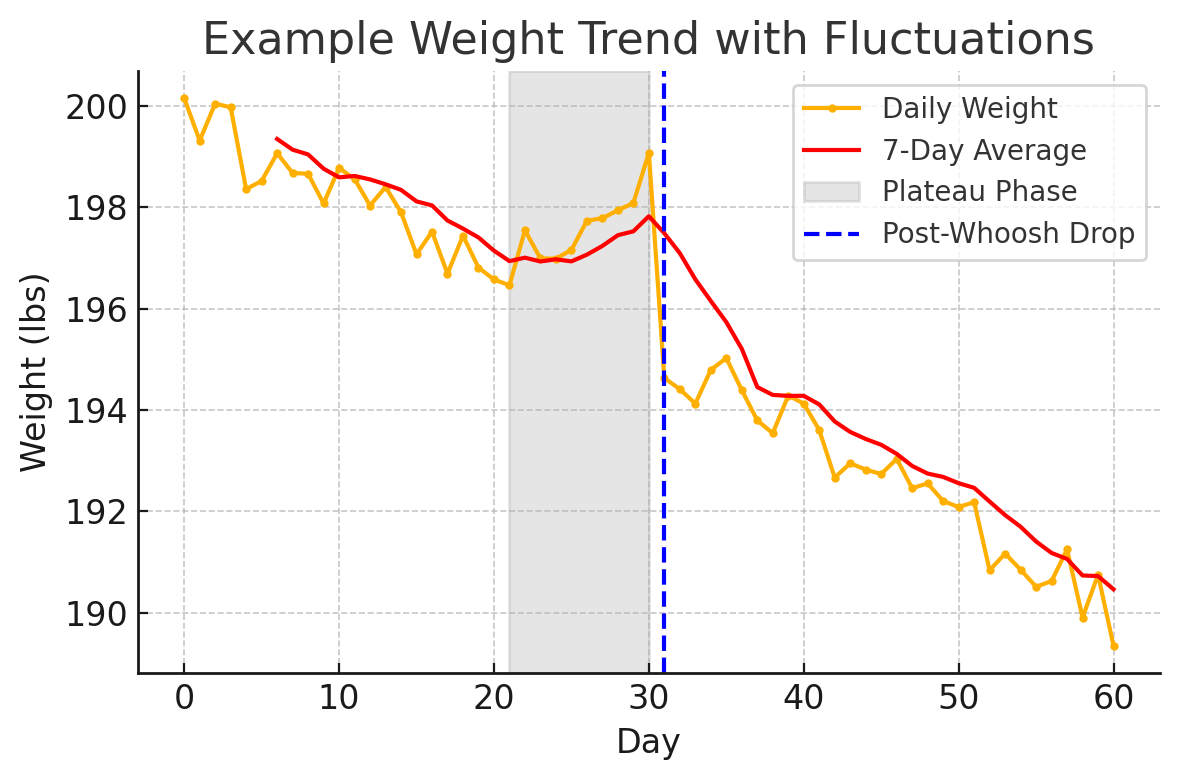
Fig 1. The nonlinear reality of weight loss
Hormonal Cycles and Menstrual Bloat
For women, hormonal fluctuations throughout the menstrual cycle can cause noticeable swings in weight and body water. It’s normal to gain 3–5 pounds during the days leading up to your period due to water retention and bloating, which reverses after your period starts[6]. In fact, about 90%+ of women experience PMS-related bloating or slight weight gain from fluid retention before menstruation[6].
These monthly changes are driven by the hormones estrogen and progesterone. Right before your period, progesterone drops and estrogen peaks, which leads your body to hold more sodium and water[6]. You might feel puffy or notice your clothes fitting tighter – but it’s temporary water weight, not fat. Similarly, ovulation and other hormone shifts mid-cycle can cause smaller blips on the scale. The take-home message: if you’re a woman, don’t panic at a mid-month weight jump. That extra weight is likely water (and maybe a bit of bloating in the GI tract) and will go away naturally[6]. It can help to track your weight against your cycle, so you learn your body’s pattern and won’t be alarmed by predictable hormonal weight fluctuations.
Medications and Medical Conditions
Sometimes, the reason for slow or stalled progress comes from outside factors like medications or health conditions. A number of common medications list weight gain or water retention as side effects. For example, steroid medications (like prednisone) often cause water retention and increased appetite. Antidepressants, certain antipsychotics, and mood stabilizers can lead to weight gain in some people[7].
Beta-blockers (for blood pressure) and insulin or some diabetes medications can also make it easier to gain weight or harder to lose it[7]. In many cases the reasons vary – a drug might slow your metabolism, increase appetite, or cause you to retain water, all of which can affect the scale[7]. Hormonal contraceptives (birth control pills, etc.) are another common cause of fluid retention; some women find they carry a bit more water weight on certain formulations.
Moreover, underlying health conditions can contribute to plateaus. For instance, hypothyroidism (an underactive thyroid) can slow metabolism, polycystic ovary syndrome (PCOS) can make weight loss more challenging, and deficiencies like low vitamin D have been linked to difficulties losing weight[1]. Chronic stress or poor sleep aren’t "medical conditions" per se, but they do drive hormonal changes (like increased cortisol and hunger hormones) that can hinder weight loss or cause extra water retention[1].
Metabolic Adaptation
If it has been more than 2 weeks and you are certain water retention isn't masking fat loss, you may have experienced metabolic adaptation.
As you lose weight, your body burns fewer calories for several reasons:
- Less Mass: Moving a smaller body requires less energy.
- TEF Reduction: Eating less food means fewer calories burned via digestion.
- NEAT Downregulation: Your body subconsciously moves less (fidgeting, posture) to conserve energy.
Strategies to Bust Through a Plateau
If you are truly stuck, you have main levers to pull. Here are evidence-based strategies to get the scale moving again:
- Revisit Your Calorie Intake: It’s common for "calorie creep" to occur. Little extras can add up. Ensure you’re accurately tracking. Consider reducing your daily intake by another 100-200 calories if suitable.
- Shake Up Your Exercise: Your body adapts. Add strength training to build metabolism-boosting muscle. Increase your daily steps (NEAT) by 2,000 steps.
- Prioritize Sleep & Stress: Lack of sleep increases hunger hormones. Chronic stress elevates cortisol (water retention). Aim for 7-9 hours.
- Stay Hydrated: Drinking enough water helps release retained fluids.
Strategy: Refeed Days
Sometimes, the solution is to eat more, temporarily. A "Refeed Day" involves eating at your maintenance calories (mostly from carbohydrates) for one or two days.
This can help lower cortisol, replenish muscle glycogen, and boost leptin levels, potentially triggering a "whoosh" of water weight loss and normalizing metabolic hormones.
Still unsure?
Check your TDEE again properly. As you lose weight, your calorie needs change.
Recalculate TDEE →Patience, Mindset, and the Big Picture
Above all, keep a long-term mindset. It took time for weight to be gained; it will take time to lose it. Don’t let a plateau discourage you into giving up.
Stay consistent with the basics because they do work. The scale will eventually reflect your efforts. As one fitness expert quips, "calories do matter", and CICO "still holds weight no matter which direction you’re trying to move the needle on the scale."[8]
References
- Not losing weight in a calorie deficit: Reasons and strategies - Medical News Today
- Getting past a weight-loss plateau - Mayo Clinic
- Water Retention and Weight Loss - Southwest Family Medicine Associates
- Calorie Deficits: Balancing Input & Output - ASN Online
- Fat Loss vs. Weight Loss: Water Retention - Rachel Trotta
- Weight Gain During Period: Is it Normal? - Healthline
- Medical Causes of Weight Gain - University of Rochester Medical Center
- Better Understanding "Calories In, Calories Out" - BarBend